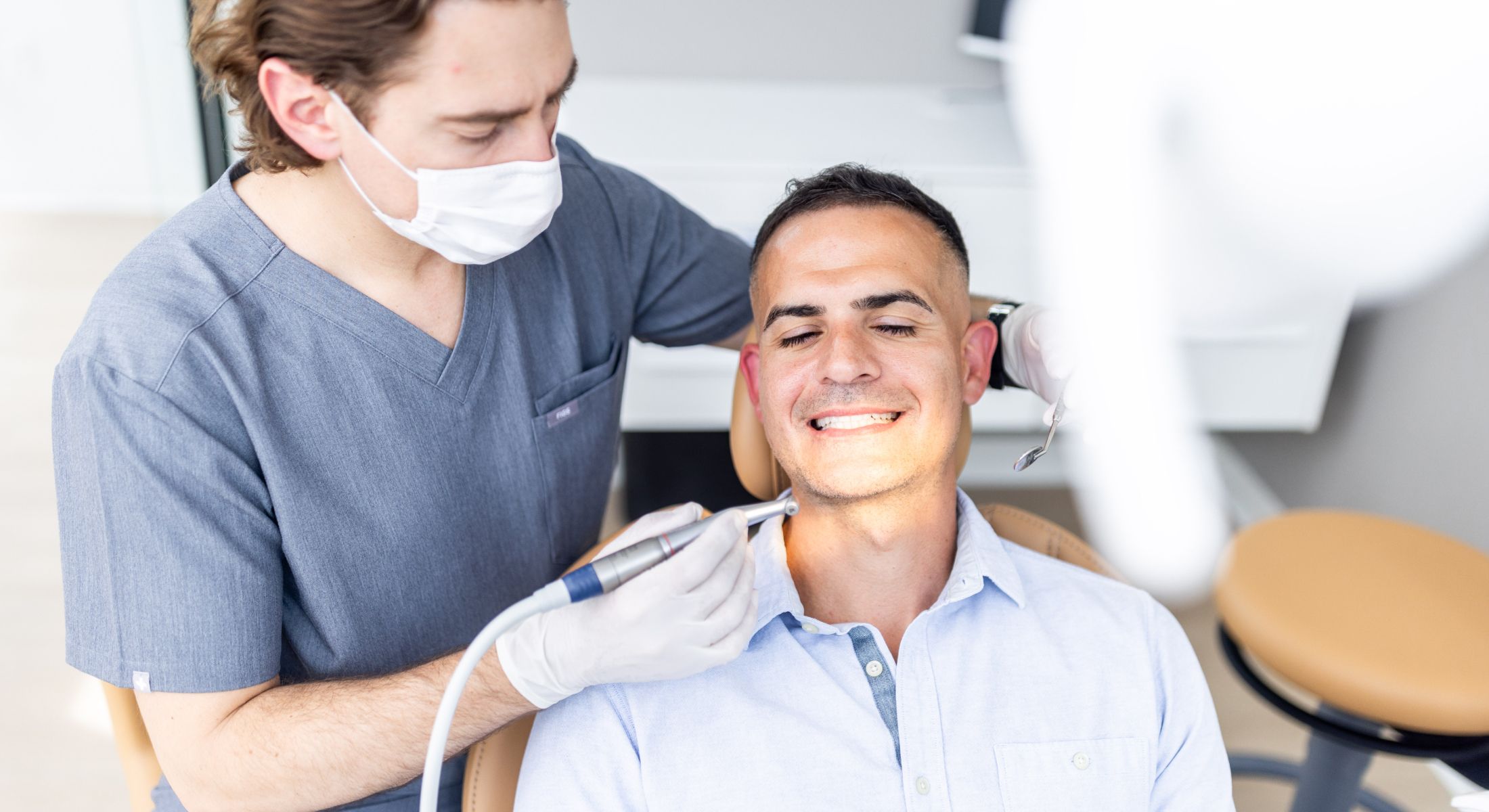
Let's talk about something that affects millions of people but rarely gets discussed openly: dental anxiety. You might cancel appointments at the last minute, delay needed treatment, or feel your pulse quicken just thinking about the dentist's chair. These reactions are completely normal, and more importantly, they are manageable. Sedation can be a great way to ease this anxiety and help keep your teeth healthy.
This guide breaks down the four primary types of dental sedation used in modern dentistry.
Understanding these dental sedation options will help you make an informed decision and prioritize your oral health without fear. Whether you need a light sense of relaxation or a deep sleep, there is an option designed for your needs.
Nitrous oxide represents the lightest form of dental sedation available today. Often called "laughing gas," this long-used method has helped many patients feel calm and relaxed during appointments without losing awareness.
The administration of nitrous oxide begins with a nose mask that fits over your face. Within minutes of breathing normally, you will notice a feeling of warmth and relaxation while still being fully conscious and responsive.
Throughout your appointment, you remain awake and able to communicate with your dentist. You can answer questions, follow instructions, and respond to requests without any difficulty. This level qualifies as minimal sedation because patients maintain normal cardiovascular function and can breathe independently without assistance.
The rapid onset of effects means you start feeling relaxed almost immediately after the mask is placed. Just as quickly, the effects disappear once the mask is removed, and you breathe regular air. Your body eliminates the gas through your lungs within minutes, leaving no lingering drowsiness or mental fog.
Nitrous oxide is ideal for:
Nitrous oxide works exceptionally well because your dentist can adjust the gas flow in real time, increasing or decreasing the level of relaxation based on your comfort throughout the procedure.
When nitrous oxide does not provide enough relief, oral conscious sedation offers the next level of support. This method uses prescription sedative medications to create a deeper state of relaxation while still allowing you to remain technically awake. Many patients describe the experience as feeling dreamy, detached, and completely indifferent to the dental work being performed.
Oral sedation relies on sedative medications taken in pill form shortly before your scheduled procedure. Your dentist will provide specific instructions about timing, typically asking you to take the medication 30 to 60 minutes before your appointment. The pills dissolve in your system and begin working as you arrive at the office.
Oral sedation creates a state of drowsy relaxation where you remain conscious but feel profoundly calm and unconcerned about the treatment. You might drift in and out of light sleep, respond to verbal commands, and maintain your protective reflexes. Patient satisfaction rates with oral conscious sedation remain consistently high because the experience feels gentle and non-invasive.
The medications used typically belong to a class of drugs called benzodiazepines, which work by slowing down nervous system activity. Your dentist selects the appropriate dosage based on your weight, medical history, and anxiety level.
Oral conscious sedation is best for:
The effects can last several hours, creating an extended window of calm. Patients require a trusted friend or family member to drive them home because the medication causes lingering grogginess that impairs reaction times and judgment.
For patients who need more relaxation than pills can provide, IV sedation may be the answer. This method delivers sedative drugs directly into your bloodstream, creating an almost immediate effect that can be precisely controlled throughout your entire procedure.
Sedative drugs are administered directly into the bloodstream through a small needle placed in your arm or hand. The intravenous route allows medications to bypass your digestive system entirely, producing an instantaneous effect that you feel within seconds. Your dentist can adjust the dosage in real time to ensure you remain at the perfect level of comfort from start to finish.
IV sedation provides a deeper level of relaxation than oral pills and often results in little to no memory of the appointment. Most patients report feeling as though they blinked, and the entire procedure was complete. This amnesic effect proves especially valuable for individuals with severe anxiety.
Throughout the procedure, your vital signs are continuously monitored by trained professionals who track your heart rate, blood pressure, oxygen levels, and breathing. This level of monitoring ensures patient safety while allowing the dentist to focus entirely on delivering excellent clinical care.
IV sedation dentistry is the preferred choice for:
IV sedation allows dentists to work more efficiently because patients remain still and comfortable throughout complex procedures. You must arrange for a responsible adult to escort you home and stay with you for several hours after treatment.
General anesthesia lies at the far end of the dental sedation spectrum, where patients are rendered completely unconscious and unresponsive. This level of care requires specialized training, advanced equipment, and a dedicated team of professionals to ensure patient safety throughout the entire process.
General anesthesia creates a controlled, reversible state of total unconsciousness where the patient cannot be easily awakened even with repeated stimulation. The medications used affect your entire central nervous system, suspending consciousness, memory formation, pain sensation, and reflexes. Surgeons can perform major procedures without causing any pain or distress to the patient.
Specialized equipment and a dedicated team track heart rate, breathing, blood pressure, and oxygen saturation throughout the procedure. Your breathing may need support through a breathing tube or mask connected to a ventilator. Your body's protective reflexes are suspended, which is why constant monitoring by an anesthesia professional remains essential.
General anesthesia is reserved for:
Recovery takes longer than other methods, typically requiring several hours before you feel alert enough to go home. You will need a responsible adult to drive you, and you should plan to rest for the remainder of the day.
Selecting among the various types of dental sedation involves a thoughtful conversation between you and your dental team. Every patient brings unique circumstances, medical histories, and comfort requirements to the table. Finding the right match means considering your anxiety level, the complexity of your procedure, your schedule, and your personal preferences.
During your consultation, your dentist will review your complete medical history, including any medications you take, allergies you have, and chronic conditions you manage. Certain health issues can influence which sedation dentistry options are safest for you. Your dentist will explain the benefits and limitations of each dental sedation option, thoroughly answer your questions, and help you weigh the trade-offs.
Some patients may benefit from a combination of methods for balanced results that address multiple concerns simultaneously. For instance, nitrous oxide can be layered on top of oral sedation to enhance relaxation without requiring deeper sedation.
Specific procedures might require higher levels of sedation for optimal safety and success. A simple filling might need only nitrous oxide, while a surgical extraction could call for IV sedation or even general anesthesia. Combining local anesthesia with any form of sedation dentistry ensures complete pain control at multiple levels.
Confused about which type of dental sedation is right for you? Our team at Garden State Dental Design has training in the latest dental techniques, and technology is here to help you.
Contact us today to find the safest, most comfortable dental sedation options for your procedure. Together, we can identify the perfect approach to make your next dental visit comfortable, safe, and successful.